The OF Blog

Thursday, October 31, 2013

Some choice quotes from one of my favorite writers

The following are taken from excerpts/pieces that appear in Music & Literature:  Issue Two Spring 2013, which is devoted to Hungarian writer László Krasznahorkai and two collaborators, film maker Béla Tarr and illustrator Max Neumann.  The first two are by Krasznahorkai himself:

I speak of that which has never existed, of a state between people, the continuance of which everyone, every human being has desired with inconceivable yearning for the whole duration of these bloody millenia, but which precisely because of him, because of this yearning human creature, indeed, directly because of the scandalous equivocation of his desire, has never been attained.  A mere human is a destructive being, a mere artist is not.  In every one of his creations, even if it is often abhorrence that motivates him, a joyful pain may make itself felt, a joyful pain, yes, that what he is bringing to life, the work, is capable of giving a form to that which truly cannot be uttered here, a mere word – comprised, altogether, of five letters in English, and in Hebrew of four – a word in connection with which I should like ot make a recommendation:  that for the duration of this festival we remain silent and do not utter it, that we remain profoundly and mutually silent, but with such strength that our entire Festival will only be about that, about this silence:  so that it may be present without having to be pronounced; because silence, silence mutually maintained about something has its own intensity, and grants to a word a mighty weight, a word, which of course is still just a word; a word evoked, with my counsel, in silence; and the broken fragments, the components of which now, with your permission, I would like to show to you. (pp. 3-4)

 שָׁלוֹם

 – from a speech given at the May 2012 Jerusalem Book Fair.  Translated by Ottilie Mulzet

The second passage is from an interview conducted by Noémi Aponyi and Tibor Sennyey Weiner:

Not long ago, an interview appeared in which you stated that it would be best if "only writers and poets occupied themselves with literature again."  Does this imply that such writers who have "put themselves up for sale" should not talk about literature, and neither should such critics? 
No.  I was speaking of a desire, namely, that it would be beautiful, really and truly beautiful, if Hungarian literature would regain its independence and its freedom from that system of cultural power, that system against which it is fighting a losing battle because it forms a part of it, that is to say it is compromised.  The greater part of the contemporary literary world (a large part, but not the entirety) gave itself blindly over to this system in newly capitalist Hungary, and it itself venerates the laws propagated by this system as something irrevocable, although these laws are anything but irrevocable.  Who made artists believe that art can be practiced only "successfully?"  Who made them believe that for a book to reach its goal and its readers, the "taste-makers" are absolutely necessary?  How could they have allowed the critics, the editors, the owners of the chain bookshops, and so on, to have so much power?  And who made them believe that they are truly artists?  It is one huge mistake, and by this I mean not only in Hungary but in all of European literary life, and it is not that I feel any personal affront, I am adequately insulated – the situation is far graver than that.  Artists have come to believe that they too, just like other people, need money and fame, money and fame for everyday life, moreover for being able to live a bourgeois lifestyle; and that these two repugnant things are seen as necessary for everything is not only tragic but ridiculous as well.  What kind of artist or writer lives like that?  Who is going to believe even a single line that he writes?  What kind of esteem can the art of our age garner for itself after even one such bout of deal-making?  No, the artist's needs are few:  let there be something for him to eat and a place to live, and then every day he should circumambulate the city, the country, like the mendicant monks of old.  Nothing whatever can be more important for him than his own personal dignity, and this is exactly what he loses forever after the very first deal-making transaction. (p. 30)

And finally, a quote from Jonathan Rosenbaum's "Sátántangó (Film and Novel) as Faulknerian Reverie":

As someone who grew up in northwestern Alabama and spent the first sixteen years of my life there (1943-1959), I have treasured Light in August, which I first read shortly after I left for a New England boarding school, as the novel that best captures the quasi-totalitarian climate of that culture, especially in relation to race.  Undoubtedly one of the reasons why Sátántangó, which I first encountered as a film seventeen years before I could read the novel in English translation but after having intermittently read portions of Joëlle Dufeuilly's 1993 French translation, Tango de Satan, reminded me of Faulkner's masterpiece was its own implicit depiction (and implicit moral indictment) of another totalitarian climate.  Even though this is not clearly not addressed as directly as Faulkner addresses racism in Light in August, it seems no less clear that Tarr and Krasznahorkai recognize and understand this climate with comparable depth, not to mention sorrow and outrage, and regard it no less metaphysically as a blight on humanity.  So, whether it's willed or not, Sátántangó deserves to be regarded in both its forms as one of the great narratives about Stalinism and its alienating effects upon individuals and a collective – including, one should stress, the lingering effects of that Stalinism on a capitalist society. (p. 128)

I still have over half of this bound-volume issue to read, but hopefully these quotes will make a few readers here curious enough to investigate Krasznahorkai's writings.  He is one of the more important writers of the past quarter-century, I believe.


Wednesday, October 23, 2013

Interesting article about changes in perspective when switching from male-centric to female-centric reading

On Tuesday, there appeared at Tor.com an interesting article by Liz Bourke entitled "Sleeps With Monsters:  Reading, Writing, Radicalisation" in which Bourke discusses some of the changes in perspective when she switched from reading primarily male writers to reading mostly women writers over the past several months.  It is worth the time to consider her arguments for having done so, but it is her challenge at the end that has prompted me to write a short response here.

While I do read some SF/F, it no longer is my primary literary genre.  Therefore, I thought it would be interesting to look through my current 2013 reading list and reviews and see what patterns that I notice.  First off, I see that I am slightly ahead of my 2013 goal in regards to percent of books (co-)written or (co-)edited by women.  I established the modest goal of 33% because I knew there would be several difficulties that I would run into when reading in other European languages and also when re-reading a couple of books/series that I usually plan on reading every 1-3 years (for example, 20 books alone are various translations of Antoine de Saint-Exupéry's Le Petit Prince, plus so far another 16 are various translations of Andrzej Sapkowski's seven book Geralt/Witcher series, with another 19 to follow in the next 1-2 months), so having read 105 books so far by women out of 298 total is a positive, albeit modest, achievement.  If I were to break it down by 2013 releases, I suspect it would be nearly 50/50. 

However, there are some interesting trends within those reads.  When I limit "SF/F" to that published by publishers who solely publish SF/F, there is quite an imbalance toward male writers.  Things improve if I shift consideration toward "speculative fiction," but near-gender parity does not occur until I start reading realist fictions or other literatures that do not fall easily into a realist/speculative divide.  An anecdotal observation:  I attended two days of the 2013 Southern Festival of Books in Nashville almost two weeks ago.  I went to seven signing sessions and five readings (two I missed due to traffic/session closed due to C-SPAN filming) during those two days:  3 readings by men, 2 by women; 4 signings by men, 3 by women.  The books/readings were very different, as 2 were histories, 1 was a non-fiction on possible future developments, 1 was a graphic novel, 1 was a twist on a family history/tragedy, 1 was a short story collection involving Southern/Appalachian life, and the last was a fantastical take on early 20th century immigration.  You might be able to guess the genders of the writers based on the categories, but the likelihood of wrong guesses is great, I should note.

When I looked at my 2013 reviews, I noticed some disparities as well.  I have reviewed 44 books/stories to date.  Of course, 20 were of women writers/historians alone, 23 were of male authors, and 1 was a three-book review in which both male and female editors' anthologies were reviewed.  But when I looked at those reviews by those works that would readily be identified as "SF/F genre," out of 16 works, 4 were by women, 11 by men, and the 1 split.  This perhaps is more telling of me as a reader of SF/F fiction (or at least what I have reviewed to date) than anything else, although the disparity could mean several things.

It certainly is true that I read fewer women writers in SF/F than any other genre.  Some of it is due to lack of interest in certain subgenres that I have sampled in the past and didn't like for prose and/or thematic reasons.  Much of it, however, is likely due to relative ignorance or a lesser tendency to re-read women SF/F writers than their male counterparts.  Do I regret this?  Perhaps a little, but beyond being willing to read certain writers who write stories that interest me, I suspect part of the disparity may simply be that I find more interesting tales written by women in other genres/non-fiction than within closely-defined SF/F (if I were to count Southern Gothic within "genre" fiction, my review count would be almost exactly 50/50).  But then again, it's all a matter of being willing to look, no?

So I suppose is the a longer way of saying that I read more women writers in other genres but that perhaps I should be more willing to consider SF/F tales penned by women.  So maybe read more Caitlín Kiernan, Jamaica Kincaid, Karen Joy Fowler, Angélica Gorodischer, Catherynne M. Valente, and others of their talent level (caveat:  I've read several works of these writers, but not everything by them)?  Feel free to suggest works, whether within or without the constricted SF/F genre definition and I may look into it.

Oh, and as an aside, Zelda Fitzgerald's Save Me the Waltz is an uneven work, but with enough flashes of talent that one should read it and wonder at just how her reputation was ruined by her husband and others.  After all, some of F. Scott's more famous lines, at least those spoken by his female characters, were lifted from his wife's diary entries...

Friday, October 18, 2013

Wendy Lower, Hitler's Furies: German Women in the Nazi Killing Fields

In Holocaust studies, one type of perpetrator, fashioned after Adolf Eichmann and others who organized deportations of Jews from Berlin headquarters, is the male bureaucratic killer, or desk murderer.  He commits genocide through giving or passing along written orders; thus his pen or typewriter keys become his weapon.  This type of modern genocidaire assumes that the paper, like its administrator, remains clean and bloodless.  The desk murderer does his official duty.  He convinces himself as he orders the deaths of tens of thousands that he has remained decent, civilized, and even innocent of the crime.  What about the women who staffed those offices, the female assistants whose agile fingers pressed the keys on the typewriters, and whose clean hands distributed the orders to kill? (pp. 98-99)
Nearly seventy years after the last death camps were liberated, the mechanics of the Endlösung still trouble readers and historians alike.  Who was involved or at least complicit in the genocide of Jews and other undesirable ethno-social groups?  To what extent, if any, were these mass killings planned?  Did the Holocaust arise from a Sonderweg, or "special path," that the Germans followed as a response to industrialization and modernity done at a faster pace than those of Western Europe?  Is the Shoah the horrific consequence of the earlier Ostland neo-colonial view of "space and race"?  How does one reconcile the machinery of the gas chambers and desk murderers with images of street violence in the occupied East, as mobs of Germans, Poles, Lithuanians, Belarussians, and Ukrainians beat tens of thousands, if not hundreds of thousands, of Jews, often to death?

To this litany of questions has recently been added another:  what roles did women play in the Holocaust?  For decades, outside of a few memorable cases such as that of the infamous "Bitch of Buchenwald," Ilse Koch, not much attention has been paid to the roles that women played in carrying out the so-called "Final Solution."  In landmark studies such as Christopher Browning's 1993 book, Ordinary Men:  Reserve Police Battalion 101 and the Final Solutionin Poland, the "ground level" focus has almost invariably been on men.  Soldiers, Einsatzgruppen, functionaries, and guards, these were the main perpetrators of the killings at their most intimate, face-to-face, level.  But who did the paperwork processing, the nursing, and other tasks both domestic and industrial alike that were a vital component of the concentration camp social societies?  Who helped tend the vast farms on which several thousand Jews and other concentration camp prisoners were forced to work as slaves to supply food for the German armies?  Yet women have often taken a back seat to men in discussions of the Holocaust.

In her National Book Award-nominated history, Hitler's Furies:  German Women in the Nazi Killing Fields, Wendy Lower begins to explore the matter of those women (mostly) behind the scenes whose actions (or non-actions) aided and abetted genocide.  Utilizing an impressive number of interviews that she conducted with the now-elderly women who were the farmers, the secretaries, and in some cases the murderesses, Lower has pieced together a history that promises to be a significant study.  Yet that word, "promises," is a damning one, as Hitler's Furies fails to become the authoritative or landmark book that it could have become.  It hints at matters, yet does not place them adequately within the framework of current historiographical discussion, leaving the work in that nebulous halfway house between being an oral history of those who were reticent at best to talk of their past lives and a study that places these women and their actions within a larger conceptualization of the Holocaust and its origins and characteristics.

Lower begins her book by introducing several issues that she intends to address.  Among these are institutional power (ranging from direct corporate-style hierarchies to less indirect ones such as the terminology employed in the Third Reich regarding cultures and nations and their degrees of worthiness) and its ability to shape women into the roles desired of them.  Yet, as Lower argues, these women were not passive objects to be set in place but instead were in many cases active agents who themselves engaged in atrocities (and not always then just to please their male companions). This, however, does not mean that the women such as Erna Petri or Liselotte Meier, to name two of the women Lower discusses at length, display a great deal of independence in their actions.  No, their actions, whether they be shooting Jewish fugitives on Petri's manor or Meier's torturing of those rounded up as the German army advanced eastward, are placed within the context of what their male lover/husband did:  Petri following the lead of her abusive husband and Meier that of her officer boyfriend.  While Lower does a good job fleshing out the personalities she discusses, there curiously is a relative lack of discussion of motives beyond the coercive factors of society and ideology.  It is as though Petri, Meier, and the others discussed in the book had lives, dreams, and ambitions of their own, but when it comes to the flashpoint of their roles in the Holocaust, those divergent characteristics fade suddenly into the backdrop of those caught up in the competing whirlwinds of loyalty to male-centric power structures and a sadistic joy in inflicting suffering.  More could have been done to discuss this, but Lower's explanation late in the book felt inadequate in that she relies too heavily on Theodor Adorno's work on authoritarian personality to explain these women's actions.  While certainly there is something to Adorno's view, it does little to account for the complexities of the actions undertaken during this time by both men and women (ranging from outright sedition down through implicit resistance to complicity and then ultimately a surpassing of the authority's desires, as if by doing so, the perpetrator could assert her own stamp on matters); there is much more to the matter.

Of greater interest, yet barely fleshed out, is the idea that neo-colonialist attitudes toward the East and its denizens might explain the actions of Petri and her compatriots:

Petri's testimony is rare.  There are few wartime and postwar records of ordinary German women expounding on their views of Jews and the Holocaust.  More common was a colonist discourse about how stupid, dirty, and lazy "the locals" were, referring to Poles, Ukrainians, and Jews, or veiled references to the dark terrain infested with "Bolsheviks," "criminals," and "partisans," or to the infantilized native who is clever but inferior, and thus dispensable. (p. 156)

This is where I suspect more and more studies of the Holocaust will go, away from focusing strictly on the mechanics of the Final Solution and toward a broader cultural analysis of the times and in particular the World War I era of Ostland and how the Ostland's governmental practices, so reminiscent of late 19th century European neo-colonialism in Africa and Asia, helped shape German attitudes toward Ostland and its natives in a much more insidious fashion than the Nazi ideology on "space" and "race."  Yet despite there being hints of this colonialist attitude in many of the women Lower profiles, she does not give as much credence to this as perhaps she should have.

The sources included in the endnotes is impressive.  Although I haven't kept up with the literature since late 1997, there are a wealth of studies on the issues of women in the Third Reich and roles of women in the Holocaust that appear to be promising reads.  Yet within the body of her study, Lower rarely mentions any of these other historians and their contributions to the field.  Perhaps this is due to Hitler's Furies being marketed more to a general audience than toward an academic one, but ultimately this leads to the sense that Lower's narrative is detached too much from the debates that historians have had on this subject over the past six decades.  While it may be understandable that Lower wants to avoid the old Intentionalist/Functionalist debate regarding the level of intent that the decision-makers had in beginning the Final Solution, the book suffers because there is insufficient grounding of her arguments within the context of larger discussions of the Holocaust's beginning, mechanics, and how its perpetrators justified their actions.  Even the women involved seem at times acting within a narrative vacuum; there is not enough explanation to cover their myriad actions.

Yet despite these serious issues that I have with Hitler's Furies, it is a book that at the very least presents vividly-described actresses and whose discussions at least point the way to possible future paths of exploration within the field.  It is a flawed work, but for non-historian readers curious about the time period, it certainly is a work that will appeal to them.  For many historians of the period, however, Lower's work may be frustrating in the sense that it seems that with just more focus on placing her work within the context of current historiography, her work could have been as important as those of Ian Kershaw and Browning in discussing the mindsets of those involved in the Shoah.  The arguments on complicity and the forms in which it took here will continue to rage on.


Wednesday, October 16, 2013

I own/have read more translations of this book than any other, including the Bible

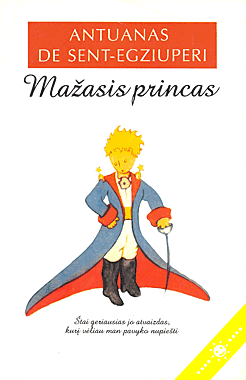
Ever since I first read it in 2000,I have been a fan of Antoine de Saint-Exupéry's Le Petit Prince.  Not only do I find its messages to be ones worth considering, I have long used it as a means of comparing translations and to teach myself how to read, albeit just a teeny-tiny bit in some cases, other languages.  Below are pictures of 13 editions that I currently own in print (the final picture shows the cover of the 14th, which shipped from Pakistan earlier this week), as well as other editions that I managed to get as e-books.

I'll list the languages in the captions, then briefly state whether or not I was able to understand the dialogue without the help of another edition/dictionary.

Serbian and French editions
I now know enough Serbian as to be able to understand the gist of the chapters.  The French I understood probably 80-90% of the sentences without needing any assistance.

Most recent English translation and Spanish edition
Both of these I understood completely with no need of any assistance (I would hope so for my native and second languages!).

German and Italian editions
I'm rusty with my German, so I probably only got about 50-60% comprehension unaided.  The Italian was better, at around the same rate as the French, maybe slightly higher.

Latin and Irish Gaelic editions
I had two years of college Latin and I understood almost all of it without assistance.  The Irish, however, I could only understand a few words here and there and I depended upon other editions to read it.

Hindi and Hungarian editions
I only received the Hindi translation today, but considering that I don't even know the alphabet yet, I will need a lot of study before I can compare it to other editions.  I only know a few words in Hungarian, so I read this one while alternating sentences with other editions.

Catalan and Portuguese editions

I needed no assistance in understanding either of these translations.

Zulu translation
I learned a few words while comparing this to another translation, but by itself, no comprehension at all.
Basque translation
See above.

Quechua translation
I knew a few words in Quechua, but that was about it.  Read in tandem with another translation.
Lithuanian edition
Very surprisingly, I understood about 10-20% of what I was reading, but I still needed lots of assistance.

Russian edition
Just as surprising was my realization that I understood over a quarter of what I read before I compared it to another translation.

Romanian edition
Unlike other Romance language editions, I needed some help in understanding it, but I did understand about 40-50% of the passages unaided.

Polish translation
Out of the Slavic languages I read, Polish was by far the hardest for me.  Full assistance needed.

Venetian edition
The Venetian translation is so close in places to standard Italian that I had little difficulty in understanding it unaided.

Czech translation


The Czech translation was surprisingly easy for me; I understood almost as much as the Serbian and I hadn't ever really looked at that language!

Brazilian Portuguese edition
I found the Brazilian Portuguese edition to be easier than the Portuguese one, plus it seemed to be more faithful to the original French.

Urdu translation
I'm still awaiting my copy, but I know I'll need assistance, as while I know most of the Perso-Arabic alphabet, there's a lot more to learn before I could even hope to do comparisons of words with other translations.

Saturday, October 12, 2013

Books I got bought and/or got signed at the 2013 Southern Festival of Books this weekend

Over the past two days (I won't be making it to the third and final day due to leaving at 5 AM Sunday morning for Dallas), I have attended the 2013 Southern Festival of Books in Nashville.  This is my third (straight) year attending it and it has become almost the only time that I'll travel (OK, it's a 50 minute car drive) to a literary event.  It has a very eclectic lineup, too much for me to see even half of the writers and presenters that I would love to see, but I did get four books signed on Friday and another six on Saturday (the final pic is of an autographed book that I purchased today but I missed the author due to a time conflict).  Here are the titles, broken down by date signed, in case it isn't clear by the photographs:

Friday:

Helene Wecker, The Golem and the Jinni (I actually first read this in ebook format back in April, but I thought highly enough of the book to buy a hardcover edition so I could get it autographed by Wecker.

Denise Kiernan, The Girls of Atomic City (I have had a review copy since March, but something or another kept coming up and I haven't yet finished it.  I plan on finishing it either Sunday or Monday, while I'm riding 10+ hours each day in the car on my way to/from Dallas).

Gene Luen Yang, Boxers; Saints - (Two-volume graphic novel on the Chinese Boxer Rebellion was recently longlisted for the 2012 National Book Award for Young Peoples' Literature.  175 pages into Boxers and it's very, very good)

Saturday:

Al Gore, The Future (looking forward to reading this during the car trip; Gore gave a good lecture on topics covered in the book)

Nate Powell, Swallow Me Whole (ARC of this award-winning graphic novel.  Powell was very pleasantly surprised to see this and he and John Aydin (see below) talked about how this book got Powell the job of illustrating March:  Book One.  Excellent read; highly, highly recommended)

Representative John Lewis, John Aydin (co-writers) and Nate Powell (illustrator), March:  Book One (Graphic novel adaptation of Lewis's early life up to his involvement in the 1959-1960 Nashville sit-ins.  It was an honor to get to shake his hand at the signing.)

Ron Rash, Nothing Gold Can Stay (I had already read about 120 pages out of this 224 page short fiction collection.  Very good work.)

Karen Joy Fowler, The Jane Austen Book Club; We are all completely beside ourselves (Fowler asked me why I had decided to read her earlier book and I said that I liked most of the "classics" and that I was an English and social studies teacher.  When she inquired further and I said I currently taught middle school, that's when she decided to write the inscriptions that she wrote.  The latter novel is one of the best 2013 releases to date.)

Therese Anne Fowler, Z:  A Novel of Zelda Fitzgerald (I didn't get to attend her reading or booksigning, but I was lucky to find out that the bookseller's table had a stack of autographed novels.  Will likely read during the trip tomorrow/Monday).

So, yeah, I had fun again this year.


Wednesday, October 09, 2013

Here are a few older releases that I recently read that I'd recommend for most readers

Although I'm going to be writing several reviews later this week/month, almost all of those will be for recent 2013 releases.  There are older releases, however, that I do think is well worth a read for many here:

Donna Tartt, The Secret History - I had intended to read Tartt's 1992 debut for over ten years now, ever since I first heard of it when her second novel was released.  Now that her third novel, The Goldfinch, is coming out on October 22, I went ahead and finally read the book (which I had purchased as a used hardcover back in the springtime).  It is one of those novels that manages to meld several disparate elements, ranging from Greek tragedy to contemporary fiction to a sort of reverse murder-mystery, in a nearly seamless fashion.  Her prose fit the characters and action so well that it was very easy at times to overlook those sentences where Tartt wrote something truly elegant.

Jean Stafford, Collected Stories - At first, I thought her prose was rather dated, but the more attention I paid to how Stafford constructed her sentences, the more beautiful the narratives became.  Some very excellent internal dialogues make several of her stories a joy to read and to reflect upon.

Thomas Merton, No Man is an Island - Nearly 50 years after his accidental death, Merton's religious reflections still influence thousands, if not millions, of readers.  There is nothing pompous about his reflections; this book simply has left me pondering, a month after finishing it, some of the implications explored within its pages.

Shani Boianjiu, The People of Forever are not Afraid - If I had read this in 2012, Boianjiu's first novel would have made my year-end Top 25.  But I didn't, alas, for this work that feels autobiographical (Boianjiu served two years in the Israeli army before studying in the US) while simultaneously exploring several layers of what it means to be a young woman surrounded by all sorts of external and internal conflicts.  Excellent narrative that deserves an even greater readership.

Feel free to ask more about these books or to comment on ones that you've already read.

Sunday, October 06, 2013

NoViolet Bulawayo, We Need New Names

Soon we are all busy drawing country-game on the ground, and it comes out great because today the earth is just the right kind of wet since it rained yesterday.  To play country-game you need two rings:  a big outer one, then inside it, a little one, where the caller stands.  You divide the outer ring depending on how many people are playing and cut it up in nice pieces like this.  Each person then picks a piece and writes the name of the country on there, which is why it's called country-game.

But first we have to fight over the names because everybody wants to be certain countries, like everybody wants to be the U.S.A. and Britain and Canada and Australia and Switzerland and France and Italy and Sweden and Germany and Russia and Greece and them.  These are the country-countries.  If you lose the fight, then you just have to settle for countries like Dubai and South Africa and Botswana and Tanzania and them.  They are not country-countries, but at least life is better than here.  Nobody wants to be rags of countries like Congo, like Somalia, like Iraq, like Sudan, like Haiti, like Sri Lanka, and not even this one we live in – who wants to be a terrible place of hunger and things falling apart? (pp. 50-51)

Zimbabwean-American writer NoViolet Bulawayo's first novel, We Need New Names, very easily could have been dismissed for being one of "those" novels:  those tales that are set in a poor land (usually a developing country in Africa or Asia) and whose characters' plights serve to reinforce Western notions of Third World poverty and deprivation.  Yet there is very little pandering, if any, to Western bourgeois expectations here.  Instead, Bulawayo's tale, set in an unnamed African country that most likely is a stand-in for her native Zimbabwe, explores matters of survival and adaptation in ways that alternate between being funny, profound, and unsettling.

Darling, the first-person protagonist, is a ten year-old girl living in a shantytown named Paradise.  She and her friends invent all sorts of games.  They sally forth into other shantytowns named after famous cities and they forage for material for both their stomachs and their imaginations.  They display a keen awareness of the inequalities in the world, but there is also laughter and an ability to shrug off the pains and travails of everyday life.  The chapters in We Need New Names are episodic, detailing key moments in Darling's young life, such as this chapter, "Shhh," on her returning father, who had returned home after several years seeking work in South Africa:

Father comes home after many years of forgetting us, of not sending us money, of not loving us, not visiting us, not anything us, and parks in the shack, unable to move, unable to talk properly, unable to anything, vomiting and vomiting, Jesus, just vomiting and defecating on himself, and it smelling like something dead in there, dead and rotting, his body a black, terrible stick; I come in from playing Find bin Laden and he is there. (p. 91)

This passage, like several others in the book, casts in almost poetic prose the mixture of emotional turmoil and carefully-developed detachment.  Darling knows there is something wrong with the man who has suddenly re-entered her life, but she presents it as a witness, as someone who is forever reporting what has happened around her.  There are moments in which she speaks through her heart, but for the most part, she recounts what she has experienced as if she were one extra degree removed from the action.  This is not a failing of her character, but rather a way to underscore just how Darling has chosen to cope with the situations occurring in her life.  This mixture of matter-of-fact reporting and eloquent prose serves to deepen the importance of the narrative's events instead of weakening their impact.

As powerful as many of the stories are within We Need New Names, the weakest section might be the chapters devoted to Darling's emigration from her homeland to live with her aunt in America.  It is not that these chapters are devoid of interesting insights (there are many), but rather that these chapters do not feel as integrated into Darling's life as the earlier chapters (and flashback sequences toward the end).  More development here in showing Darling's adjustment to life in the US would have strengthened the already very good narrative even stronger, as it would have made the final chapters, those that detail Darling's struggle to find a new self-identity, more powerful.  But on the balance, this lack of development late in the novel does not make We Need New Names a weak novel, but rather a strong tale that falters toward the end.

Yet despite this, We Need New Names was an excellent choice for the 2013 Booker Prize shortlist.  It is a smart, engaging novel with an intriguing protagonist.  The plot development for the most part is handled well and the prose is a joy to read.  Outside of the weakness noted above, it succeeds admirably in describing a character and a land in a way that few non-Africans could ever hope to accomplish.  We Need New Names is a very good novel that hopefully signals the beginning of a very long and successful writing career for Bulawayo.  Well worth the effort in tracking it down.


Add to Technorati Favorites