The OF Blog: Gabriel García Márquez
Showing posts with label Gabriel García Márquez. Show all posts

Wednesday, April 30, 2014

This may be one of the strangest book covers I own


I was going through my Portuguese-language bookshelves tonight and I happened to recall thinking that when I bought this used a few years ago that this Brazilian edition of Gabriel García Márquez's story collection Ojos de perro azul (Eyes of the Blue Dog) might just feature one of the weirdest, oddest covers that I own outside the infamous Ballantine Adult Fantasy anthology that featured a naked man riding a huge serpent.  There's just something glorious about the sombrero-wearing skeleton hoisting a dusty bottle, but it's the chicken in the corner, staring ahead, that adds that je ne sais quoi quality to the piece to make it something truly sublime.

Thought I'd share this with those who like weird cover art...and those who fancy chickens and/or drunken skeletons, I suppose.

Wednesday, April 23, 2014

Gabriel García Márquez, Cien años de soledad (One Hundred Years of Solitude)

Muchos años después, frente al pelotón de fusilamiento, el coronel Aureliano Buendía había de recordar aquella tarde remota en que su padre lo llevó a conocer el hielo.  Macondo era entonces una aldea de veinte casas de barro y cañabrava construidas a la orilla de un río de aguas diáfanas que se precipitaban por un lecho de piedras pulidas, blancas y enormes como huevos prehistóricos.  El mundo era tan reciente, que muchas cosas carecían de nombre, y para mencionarlas había que señalarlas con el dedo. (p. 81, Catedra edition)
Gabriel García Márquez's 1967 novel, Cien años de soledad (translated into English in 1970 by Gregory Rabassa as One Hundred Years of Solitude), is perhaps one of a handful of 20th century fictions that have had an impact far beyond that of the tens of millions worldwide that have read it over the past 47 years.  Its codification of Colombian (and by extension, Latin American) post-colonial history gave a voice to a region whose literature prior to the mid-20th century had largely been dismissed as provincial, as not worthy of the respect rendered to Western European and North American national literatures.  As the most famous of the "Boom Generation" novels, Cien años de soledad has been quoted by politicians across the globe and has served as an inspiration (and later a point of departure) for two generations of Latin American writers.

Yet the accolades can get in the way of a deeper appreciation for what García Márquez achieved here.  It is too tempting to fall in line with what others have said, often in a gushing, adoring fashion, about this novel.  It could be viewed as being predominantly about X, Y, and Z, without the reader stepping outside of those blurbs and reviews' interpretative schemae.  Useful as these models are for understanding what is transpiring within the novel, especially on the symbolic level, they can rob the reader of that pure joy of what considering what the import of each phrase or sentence might be, even if (especially if?) they are ignorant of much of the allusions, historical and literary alike, that García Márquez makes.  Sometimes it can be best for the reader to experience them like the early inhabitants of the fictional town of Macondo do in the passage quoted above, as if they were in a world that "was so recent that many things lacked names and in order to mention them you had to point at them with a finger. (translation my own)"  There is much to discover within the world of Macondo, the city of mirrors, that sometimes it behooves the reader to wander through its pages, piecing together, as six generations of Buendías attempt to do, the clues embedded within this rich text.

Cien años de soledad covers seven generations of the Buendía family, first introduced in García Márquez's earlier novels.  It is here in this novel, however, that nascent themes from those earlier novels mature and bear bittersweet fruit.  Ranging from the immediate post-colonial period of the mid-19th century to the mid-20th century, Macondo and its founding family incorporates much of Colombia's conflicted, troubled past.  In the cycle of the boisterous Arcadios and the brooding Aurelianos can be seen a symbolic tale of passion and greed, of pride and sorrow.  The language of the early chapters resembles in many fashions those tales found in the Book of Genesis in that the feats of the early generations seem outsized and otherworldly, creating a sense that what is transpiring is irreal and yet intimately and intricately tied to a very real past and present.

Yet these moments of levitating priests and resuscitated gypsies do not detract from the very real events encoded within them.  The section with the house colors foreshadows the rise of strong men and the marking of seventeen bastards with a permanent Ash Wednesday cross symbolizes the connections between belief and violence, between the desire to hold power and the urge to reform.  Time and time again, García Márquez revisits these elements, culminating in the four years, eleven months and two days of rains that follow the massacre of 3000 striking banana plantation workers and the village's subsequent forgetting of their collective fate.  These events echo those of Colombia's violent early 20th century, from the time of the War of a Thousand Days (1899-1902) to that of La violencia of 1948-1958.  A prior knowledge of Colombian history will enhance a reader's appreciation for García Márquez's embedding of these events within his Macondo tales, but it is hardly necessary for comprehension and enjoyment of this novel.

Cien años de soledad easily could have been a "political" novel, but its symbolic elements go far beyond references to the past and then-current events, moving more toward a deep, keen look at humanity and our roles as agents of order and change.  Each character represents certain qualities, from the egotistical early Buendías to the forlorn romantics who frequently find understanding but not solace from their frustrated desires.  The various modes of solitude have been addressed at length by others elsewhere, but it certainly lies at the core of this novel.  Each character experiences their own form of solitude, from that of loss of mental capacities, to the laborious making and unmaking of items (many of which tienen vida propria), to unrequited love to love that distances them from outsiders.  These presentations of solitude within the context of a novel in which passion is codified within magical events (like the profusion of butterflies or an afternoon assumption) is so well-realized in their intricacies that it is difficult to skim over even a single line without missing something beautiful and important.

For some, this richness of symbolic, powerful metaphors can be overwhelming, as there is so much packed within the margins of the novel.  Indeed, multiple re-readings may be required to squeeze more from the text.  But the effort is more than worth it, because García Márquez wrote a novel that is at the very least on par with that one of his primary influences, William Faulkner.  In re-reading Cien años de soledad, I found echos of Yoknapatawpha County and its denizens.   There is a kindred spirit between the Southern writer and the Latin American novelist that goes far beyond the literary techniques of stream of consciousness and the use of mythological elements to add depth to a core realist story.  There is a spirit of resilience, of seeing great devastation and despair and using those violent elements to construct tales that speak to their readers on the most intimate terms.  García Márquez's prose is so exquisite, his characterizations so organic and well-developed, that his only major "flaw" may be that he has created a story that defies deeper analysis, because the more one delves into the individual threads that constitute this narrative tapestry, the more one risks missing the wondrous forest for a few fascinating leaves.  Cien años de soledad was the first novel I read in Spanish when I learned the language a decade ago and this re-read only confirmed my positive impressions.  It is one of my all-time five favorite fictions and each re-read has only served to add to my appreciation for what García Márquez accomplished here.

Friday, April 18, 2014

R.I.P. Gabriel García Márquez

Yesterday brought the sad news of the passing of Gabriel García Márquez at the age of 87.  It was not unexpected, as his brother said in 2012 that Gabo had senile dementia, but it is still a loss tinged when memories, far from all of which were melancholic, of the wonderful stories he had created over a span of nearly sixty years.

As is often the case when a famous writer dies, readers of his/her work try to summarize the impact that the author's writings have had on them.  For myself, it was the desire to read Cien años de soledad (One Hundred Years of Solitude) in its original idiom that led me to learn how to read Spanish fluently ten years ago.  A week ago, I had started re-reading Cien años de soledad for a review here in the coming week or two.  I would read maybe a chapter or two a night, often after my tasks at my night job were complete and I was awaiting the arrival of the late-night shift, and think on the vivid imagery, recalling the laborious yet fruitful effort of writing down unfamiliar words and looking them up ten years ago, learning dozens of words a week, reading perhaps a scant five pages a day, until I finished reading it in April 2004, around the time of my Confirmation.

It is odd, ten years later, to learn of the author's death before another Easter celebration.  I had just finished reading two nights before the death of José Arcadio Buendía about midway through OHYS and I remembered this passage after learning of Gabo's death:

Cuando estaba solo, José Arcadio Buendía se consolaba con el sueño de los cuartos infinitos.  Soñaba que se levantaba de la cama, abría la puerta y pasaba a otro cuarto igual, con la misma cama de cabecera de hierro forjado, el mismo sillón de mimbre y el mismo cuadrito de la Virgen de los Remedios en la pared del fondo.  De ese cuarto pasaba a otro exactamente igual, cuya puerta abría para pasar a otro exactamente igual, y luego a otro exactamente igual, hasta el infinito.  Le gustaba irse de cuarto en cuarto, como en una galería de espejos paralelos, hasta que Prudencio Aguilar le tocaba el hombro.  Entonces regresaba de cuarto en cuarto, despertando hacia atrás, recorriendo el camino inverso, y encontraba a Prudencio Aguilar en el cuarto de la realidad.  Pero una noche, dos semanas después de que lo llevaron a la cama, Prudencio Aguilar le tocó el hombro en un cuarto intermedio, y él se quedó allí para siempre, creyendo que era el cuarto real.  A la mañana siguiente Úrsula le llevaba el desayuno cuando vio acercarse un hombre por el corredor.  Era pequeño y macizo, con un traje de paño negro y un sombrero también negro, enorme, hundido hasta los ojos taciturnos.  «Dios mío», pensó Úrsula.  «Hubiera jurado que era Melquíades.»  Era Cataure, el hermano de Visitación, que había abandonado la casa huyendo de la peste del insomnio, y de quien nunca se volvió a tener noticia.  Visitación le preguntó por qué había vuelto, y él le contestó en su lengua solemne:

– He venido al sepelio del rey.

Entonces entraron al cuarto de José Arcadio Buendía, lo sacudieron con todas sus fuerzas, le gritaron al oído, le pusieron un espejo frente a las fosas nasales, pero no pudieron despertarlo.  Poco después, cuando el carpintero le tomaba las medidas para el ataúd, vieron a través de la ventana que estaba cayendo una llovizna de minúsculas flores amarillas.  Cayeron toda la noche sobre el pueblo en una tormenta silenciosa, y cubrieron los techos y atascaron las puertas, y sofocaron a los animales que durmieron a la intemperie.  Tantas flores cayeron del cielo, que las calles amanecieron tapizadas de una colcha compacta, y tuvieron que despejarlas con palas y rastrillos para que pudiera pasar el entierro. (pp. 241-242, Catedra edition)

On this Holy Friday, as many of us, like the wandering Cataure, come in spirit to the funeral of the King, it is fitting that we make note of the passing of a lesser, literary king, one whose recasting of Colombian (and by extension, Latin American) history in the form of a flyspeck village whose miracles, such as the rain of yellow flowers narrated above, served to heighten both the realness and irreality of the 20th century.  The world is now not so recent, not so new, that we lack names for everything, but sometimes we still just have to point to those rare things that defy our poor attempts to describe them.  Gabriel García Márquez is one of those and all these words above try to do is to provide a reason for me to just point to his works and signal, "read these, for there is much of us in them."  If that is not enough to persuade, then perhaps nothing will be fitting enough.

Thursday, February 13, 2014

Gabriel García Márquez, La mala hora (In Evil Hour)

El padre Ángel se incorporó con un esfuerzo solemne.  Se frotó los párpados con los huesos de las manos, apartó el mosquitero de punto y permaneció sentado en la estera pelada, pensativo un instante, el tiempo indispensable para darse cuenta de que estaba vivo, y para recordar la fecha y su correspondencia en el santoral.  «Martes cuatro de octubre», pensó; y dijo en voz baja:  «San Francisco de Asís.» (p. 7)

Father Ángel sat up with a solemn effort.  He rubbed his eyelids with the bones of his hands, parted the embroidered mosquito net, and he remained seated on the bare mat, pensive for an instant, the time indispensable for realizing that he was alive and for recalling the date and its corresponding saint's day:  "Tuesday, October fourth," he thought; and he said in a low voice, "St. Francis of Assisi."
In reading Gabriel García Márquez's earlier long fiction, it is difficult for me to escape comparing the characters of those stories to their namesakes that appear in One Hundred Years of Solitude.  Characters, often in altered form, who make brief but memorable cameos there, like Father Ángel, color the impressions of these earlier tales.  Certainly there were times in reading his 1962 novel, La mala hora (In Evil Hour in English), that certain scenes read differently just because of the names of the characters.  This is not surprising yet is very unfair when it comes to judging these stories, especially in the case of In Evil Hour.

The story is set in a nameless Colombian village (later clarified to not be Macondo) in which a nameless prankster has begun posting anonymous broadsides detailing the sordid lives of the villagers.  This darkly comic premise quickly turns violent, however, as an enraged husband settles the matter of gossip in murderous fashion.  This event triggers a more serious turn of events, as the mayor (named Arcadio, with no surname) enforces a sort of lawless martial law.  This in turn reflects on the very real history of La violencia, where around a quarter-million Colombians died in a massive wave of violence and near-anarchy during the middle decades of the 20th century.

In the story, García Márquez focuses on the dynamics of rumor and retribution, showing how the former fed into the latter, creating a situation in which baser passions come to dominate the socio-political discourse.  Fear engendered by mockery sweeps through the village, yet the source of the lampoons is never discovered, despite the fiercest efforts by the mayor's goon-like police force.  In a way, this never-solved mystery makes what followed after all the more terrifying to consider, as there are numerous occasions throughout national histories of hysteria feeding the worst systematic abuses of human rights.  Certainly this is the case in this novel and García Márquez's capturing of this violent "feeding frenzy" is one of the story's best elements.

Yet there are some weaknesses as well.  Despite the intriguing and occasionally chilling narrative, the characterizations on the whole feel less well-developed compared to the author's other work.  Mayor Arcadio in particular is more of a figurehead here for the government's capability of unleashing violence on its own citizens and while that is likely done on purpose in order to make that comparison clearly, it does rob the novel of lively, interesting characters around which this tale of rumor-mongering leading to violence revolves.  Furthermore, the humor at times feels a bit heavy-handed, lacking a consistency of nuanced subtlety that could have made it an even better satirical story to read.

However, these criticisms are mostly minor.  The prose is clear and yet brimming with colorful expressions and clever humor.  The theme on the causes and effects of state-instituted violence is on the whole treated very well.  While In Evil Hour might not contain a powerful conclusion like those found in No One Writes to the Colonel or One Hundred Years of Solitude, its conclusion does mirror nicely its beginning, bringing the reader full circle after a tumultuous yet entertaining experience.  It may not be one of his best novels, but In Evil Hour certainly is one of García Márquez's most sobering commenatries about the political climate in his native Colombia in the mid-20th century.

Monday, February 10, 2014

Gabriel García Márquez, El coronel no tiene quien le escriba (No One Writes to the Colonel)

El coronel destapó el tarro del café y comprobó que no había más de una cucharadita.  Retiró la olla del fogón, vertió la mitad del agua en el piso de tierra, y con un cuchillo raspó el interior del tarro sobre la olla hasta cuando se desprendieron las últimas raspaduras del polvo de café revueltas con óxido de lata. (p. 7)

The colonel took the top off of the coffee can and saw that there wasn't more than a spoonful.  He removed the pot from the stove, poured half of the water on the earthen floor, and with a knife scraped the the last bits of the ground coffee, mixed with rust, into the pot.

It is all too easy sometimes to think of Gabriel García Márquez writing in one form, retelling the same type of magical adventures with butterflies fluttering in while innocent maidens are assumed into heaven.  Yet some of his more famous stories are grounded in a rough, sometimes brutal realism that contain a terrible beauty of their own.  In his 1961 novella (actually written in 1957, but not published for another four years), No One Writes to the Colonel, García Márquez captures in miniature much of the disillusionment that pervaded Colombia in the aftermath of the Thousand Days' War of 1899-1902.  It is an atmospheric, brooding tale that builds slowly to a famous closing line that encapsulates in a single word the entirety of the events that unfold.

The titular colonel, purposefully left unnamed in order to capture better the pervasive sense of endemic lack of faith in the (conservative) government's promises, is seventy-five years old at the time of the story.  A veteran of the Thousand Days' War (fighting for the Liberals), he has long awaited the long-promised and yet long-delayed pension granted to veterans on both sides of that bloody civil war.  He and his wife live in straitened conditions, as shown in the opening paragraph quoted above.  He continually makes plans for that future in which the pension has finally arrived.  Much of the narrative is devoted to contrasting his misplaced faith with the deprivation that surrounds him.  This creates a conflict in belief/appearance that makes each individual statement all the more interesting to read, because each self-delusional comment serves to add to the oppressing despair that García Márquez has carefully built here.

At the heart of the colonel's dreams lies a rooster that he has inherited from his now-dead son, yet another victim in the long period of La Violencia that plagued Colombia in the early-to-mid 20th century.  In this rooster he sees a cockfighter that will earn him much-needed income, allowing him and his wife to live their remaining years in better conditions.  As he trains this rooster, putting much care and resources that he could ill-afford to squander on it, the reader is led to feel sympathy, mixed with puzzled dismay, over this old man's misplaced faith in things that he will never achieve. 

It would be too easy here to dismiss the colonel as a deluded old fool, worthy of the reader's contempt.  Yet García Márquez imbues the colonel with a sort of quiet, enduring dignity that it is difficult to not wish that his quixotic hopes would become a reality.  But alas, reality does get in the way all too often of our aspirations and it is in the crushing of the colonel's latest hope that leads to a singular moment that is devastating precisely because the colonel has been developed so well.

No One Writes to the Colonel succeeds as a narrative because García Márquez has created a memorable character whose travails serve not only as a symbol of the widespread crushing of dreams in Colombia, but also because even those readers such as myself who are not Colombian natives can see bits of ourselves in the colonel and elements of his difficulties in our lives.  It is this mixture of the particular and the universal that make this novella such a powerful read.  If it were not for the 1967 novel that followed, No One Writes to the Colonel perhaps could have been remembered as a powerful longer story by a master of short fiction.  Even so, it still is a fine introduction to García Márquez's fiction for those who might be daunted by the size and complexity of One Hundred Years of Solitude.

Thursday, February 06, 2014

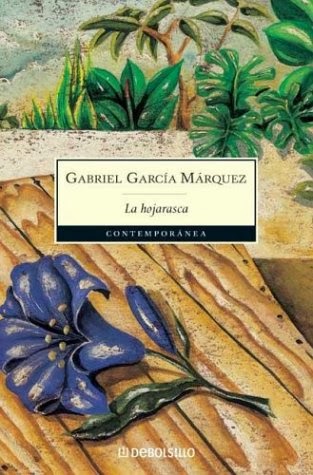
Gabriel García Márquez, La hojarasca (Leaf Storm)

Por primera vez he visto un cadáver.  Es miércoles, pero siento como si fuera domingo porque no he ido a la escuela y me han puesto este vestido de pana verde que me aprieta en alguna parte.  De la mano de mamá, siguiendo a mi abuelo que tantea con el bastón a cada paso para no tropezar con las cosas (no ve bien en la penumbra, y cojea), he pasado frente al espejo de la sala y me he visto de cuerpo entero, vestido de verde y con este blanco lazo almidonado que me aprieta a un lado del cuello.  Me he visto en la redonda luna manchada y he pensado:  Ése si yo, como si hoy fuera domingo. (p. 13)

For the first time I have seen a corpse. It's Wednesday, but I feel like it's Sunday because I have not gone to school and I have this green corduroy dress that squeezes me somewhere. From Mom's hand, following my grandfather groping with his stick at every step to avoid tripping over things (he can not see well in the dark, and is lame), I passed by in front of the mirror in the room and I've seen my whole body, dressed in a green and white starched tie that squeezes my neck to one side. I have seen myself in the round stained moon and I thought: That's like me, as if today were Sunday.

As early as his first novel, La hojarasca (1955), Gabriel García Márquez had begun to experiment with utilizing dramatic first paragraphs set in media res in order to capture immediately the reader's attention.  There is a hint here of García Márquez's memory of ice scene at the beginning of his 1967 masterpiece, Cien años de soledad, not just in the conflation of (near) death and childhood, but also in way that the present and past merge to create something that occupies a nebulous space between the two.  Yet despite this, there is a sense that La hojarasca is less nuanced, as if García Márquez were just experimenting with themes and motifs that he would explore in his later fiction.

The story revolves around the recent death of an unnamed doctor who arrived in Macondo in the wake of United Fruit's arrival, one, but an infamous one, of the wave of hojarascas (a rough equivalent in English would be drifters) that came to Macondo in the early 20th century.  This doctor was greatly despised by the villagers for reasons that only become apparent late in the story.  There are only three people, the elderly grandfather (a former colonel), his daughter, Isabel, and her young grandson, who observe any sense of decorum.  In a sense, made crystal clear by the quote provided in the epigraph, each of the three plays in some form or fashion the role of Antigone, seeking burial for the hated deceased.

García Márquez does not tell this tale in a linear fashion.  As the PoV moves between the three generations of the grandfather's family, elements that happened just recently bump up against those of decades before.  Each family member express themselves through a stream of consciousness that manages to capture the tumult of Macondo's past.  Echoes of Columbia's devastating early 20th century civil war are seen not just in the first, brief appearance of Aureliano Buendía, but also in references to other characters who gain a greater, sometimes more tragic depth in the later Cien años de soledad.  Through it all, the situation of the now-dead doctor becomes clearer and more central to other events that transpire (or are merely hinted at in certain scenes) throughout the novel.

For a first novel, La hojarasca is better than average, with themes of tragedy and solitude that are later echoed in García Márquez's later fiction.  Yet La hojarasca feels incomplete, as if there were other, more symbolic, narrative layers that García Márquez did not develop fully.  The entangled web of village hurts and anger only hints at what he later covered in subsequent Macondo stories.  The characters are sketchier, as if García Márquez was uncertain how to develop them beyond the plot exigencies.  These weaknesses, which perhaps are such when compared to the author's later works, do not make La hojarasca a poor or mediocre novel.  But they do serve as a reminder that García Márquez continued to mine the material that he developed (or perhaps discovered is a more apt verb to describe what occurs here?) to great effect in the following twelve years.  If only there were more first novels that were like this.

Tuesday, February 04, 2014

Starting my commentaries on Gabriel García Márquez's fiction this week, other plans

Had a lot to do this weekend, so I had to postpone until later this week (most likely Thursday) my series of commentaries/short reviews of Gabriel García Márquez's major (and some minor) fictions and non-fictions.  Probably going to write (depending on how much reading time I have) 3-5 commentary-reviews a week for the next 4-6 weeks.  The format will be similar to my June-August 2010 "Borges Month" in that the length will vary by what is covered and that there might be more of a focus on particular elements that interest me.  I plan on covering the pre-1967 fictions first and would like to write about Cien años de soledad/One Hundred Years of Solitude around Presidents' Day weekend, when I'll have a bit more time to write.

There will be other posts.  I'll be continuing, at 1-2 posts/week, my commentaries on my old 1994 translation notes of Book I of Vergil's Aeneid, and there will be reviews of at least two works in the next week or so, Jeff VanderMeer's Annihilation and Kyle Minor's Praying Drunk, both of which officially were released in the US today.  So far this year, I have managed to make at least one post a day and I'm going to attempt to continue this for as far as I can, so expect more commentaries and reviews in the days to come, perhaps some that will be a (hopefully pleasant) surprise to readers.  From a quality standpoint, my reads (and reviews) so far have been better than average, so perhaps it's well past time to comment more on those works that I have enjoyed?

Sunday, January 19, 2014

To my shame, I realized tonight that I have yet to review any of Gabriel García Márquez's work

Considering how much I loved reading One Hundred Years of Solitude/Cien años de soledad (I taught myself how to read in Spanish in part because I wanted to read this magical story in its original idiom), this is a grievous oversight.  Too often, great writers who haven't had any recent works released (and sadly, with his brother reporting two years ago that Gabo has signs of dementia, he may never release anything new in his lifetime) never really garner new reviews from readers until their passing.

I don't know if I have the time to work it into my busy schedule, but I may devote a month this spring (perhaps April or May?) to writing commentaries and short reviews of his short fiction and novels.  It might not quite be like the Borges "month" I did from late June-early August 2010, but I could see something approaching a post every day or two during that time.  After all, few writers so deserve such a treatment as that, but Gabo certainly is one of them.  Hopefully, there will be some readers interested in this possible project.

Monday, June 11, 2012

If true, this is very sad news regarding Gabriel García Márquez

A few minutes ago on Twitter, I saw some Brazilian writers I follow retweeting a link to a Brazilian newspaper that reports that Nobel Prize laureate Gabriel García Márquez is suffering from dementia (link is to the Google Translate translation of the article).  While not confirmed by his family, it does sound as though the circumstantial evidence strongly indicates that Gabo is indeed suffering from senile dementia.

This new saddens me greatly.  Not just because I am a fan of his works, but also because it was less than a year ago that my maternal grandmother was entering the last stages of her dementia before she died in November.  The way the journalists cited in the article describe Gabo's comments is eerily similar to how my grandmother would greet members of the family whenever we would come to visit.  The repetition of general questions, the masking of forgetfulness, the pattern of conversation – all of that described in the article was what we witnessed with my grandmother.

Hopefully, this information is a hoax...but I fear that it may not be.

Monday, November 10, 2008

What Macondo means to this gringo

A few weeks ago, there was talk at wotmania about discussing Colombian author Gabriel García Márquez's famous 1967 novel, Cien años de soledad (One Hundred Years of Solitude in English translation) starting today, November 10. However, the person who initiated the talk has had some issues with the story and I am uncertain if the planned discussion there will occur. In a way, I am not surprised at her reaction or at the few negative comments I have read in those linked threads, because of the story's structure as well as the historical and cultural elements that inevitably are lost in translation.

I first read Cien años de soledad back in the late winter of 2004. I possessed a copy of the Gregory Rabassa English translation and an annotated Catedra paperback Spanish edition and I read the two editions in a sort of parallel text. My Spanish was very, very rudimentary back then and in fact this was the first novel I ever completed in Spanish. It took me almost two months of reading 5-10 pages a night and writing down every single word I didn't know before I completed the story. I remember feeling both relieved and saddened when I reached its devastating conclusion. I put the books on the shelf and I never touched the story again for three years.

In the interim, I quickly broadened my knowledge of Spanish to where a year later I was able to read novels without needing a parallel text and with only the occasional bilingual dictionary consultation. I discovered Argentine authors such as Jorge Luis Borges and Adolfo Bioy Casares. I explored the Crack Manifesto and McOndo writers such as Jorge Volpi, Ignacio Padilla, Edmundo Paz Soldán, and Alberto Fuguet. I took two high intermediate/advanced Spanish grammar courses at a local university to develop further my ability to read and write in my second language. I read the online editions of dailies from Colombia and Argentina, among others. In short, minus regular contact with native speakers after my move back to Tennessee from Florida in 2003, I worked hard to become reading fluent in Spanish.

So by the time I decided in early 2007 that I wanted to read more of García Márquez's work, I had not only imbibed grammatical elements from that list of outstanding authors, but also I took in much of their attitudes toward the world. While I will never be confused with a native, I have had discussions with friends of mine from El Salvador and Argentina online about certain favorite stories of theirs and they have expressed surprise at what I "get." I am uncertain if I accept their platitudes, however, since after all, what I mostly noticed in Gabo's stories, especially his earliest novels, is a very close familiarity with the literature of my native South, particularly that of William Faulkner.

When I read La hojarasca, La mala hora, El coronel no tiene quien le escriba, and Los funerales de la Mamá Grande last year, it was my viewing them through the twin prisms of my cultural awareness of Southern literature and my acquired knowledge of 19th and 20th century Latin American historical and cultural developments that enabled me to view García Márquez's Macondo novels in a different light. My perception of Cien años de soledad changed radically as a result.

I mentioned Faulkner above. While it is debatable as to the amount of influence that Faulkner had directly on the techniques and motifs of the Boom Generation writers, there certainly are several points of explicit similarity that his Yoknaputawpha County and Gabo's Macondo. Both are fictional creations that serve to stand in place of the "real" Mississippi of the early 20th century or of the "real" Aracataca of the early-to-mid 20th century. There are Biblical allusions to floods and plagues as well as to moments of little triumphs and a greater awareness of the darkness that lurks in the human soul. Faulkner's Snopes novels perhaps might find its spiritual kin in Gabo's first few stories, contained in La mala hora and La hojarasca. Each author uses narrative techniques (such as Faulkner's application of stream of consciousness in The Sound and the Fury and García Márquez's reliance upon magic realism in Cien años de soledad in particular) to heighten the reality of the events transpiring in the novels. In the end for both authors, the unreal doesn't usurp the urgency of the real, but rather it complements it, creating metaphors and connections that eventually collapse into conclusions that can be very dark, depressing, yet also emotionally powerful.

There are of course differences; Faulkner's South contains different tragedies than does Gabo's Caribbean coastline. While there is a hint here and there of imposed social change in Faulkner's story as a consequence of the devastating American Civil War, in the Macondo novels, it is more of a post-colonial reaction to the days of Big Stick and Dollar Diplomacy, when American imperialism infiltrated Latin American societies and governments in a much more insidious fashion than British or French imperialists could penetrate the African societies that they conquered in the late 19th century.

Becoming aware that events in the Macondo novels such as the segregation of Macondo's population from the United Fruit compound or how the nameless colonel suffered through poverty and broken promises are all based on very real events such as the Banana Massacre of 1928 and the Thousand Days War of 1899-1902 has allowed me to gain further insights into why the stories are structured in the way that they are. Many people have complained about the lack of a "regular" time in the Macondo novels. It is not so much that Gabo aimed for a "timeless" feel, but I suspect it is more to convey the sense that change is ephemeral and that throughout the course of Macondo's development (whether it be seen as a more Naturalistic set of period pieces in the earlier novels or as a biblical/mythical allusion in Cien años de soledad) one can see the trail of lies, broken promises, and impositions from outside on the lives of the village's inhabitants.

When I started this latest re-read, I couldn't help but to think of these novels not as examples of the intermingling of fantasy and realism, but as very real and powerful metaphors for some of the nastiest, most hurtful, and tragic events of the past two centuries. Colombia has had a bloody past and present. It has been consumed by a three-part low-level civil war since the 1960s, around the time of these novels' publications. The paint colors of Macondo's houses takes on a whole new meaning when read as a commentary on the Liberal/Conservative divide that has produced the Thousand Days War, the infamous Treaty of Neerlandia, as well as sparking the formation of FARC. Not many Americans are going to be aware of what is transpiring under the surface of these novels. Either they'll love the prose and the hints of tragedy, but the dark humor and the full impact of the tragic events and their connections to Colombian history will be missed. Lost in translation applies to much more than how to render words. How does one translate a shared cultural/political past with a forastero?

But yet it is possible in an imperfect sense to gather more than surface-level impressions if one is not a native. However, it is very tough and it took me multiple re-reads, consultations of other fiction and non-fiction, and numerous conservations with Latino friends of mine to grasp just a few more facets of some very multi-faceted literary gems. Perhaps others here have had an easier time grasping the nuances of another culture via translated literature (or literature read in the original language)?

Saturday, November 08, 2008

New poll, upcoming post

I recently agreed to participate in an upcoming discussion at wotmania regarding Gabriel García Márquez's One Hundred Years of Solitude. To prep myself for it (my fourth read of the story), I decided to re-read his earlier Macondo-based novels and story collections and in the next couple of days I will make a blog post about those novels.

In addition, I decided to run a poll both here and at wotmania on Gabo, just to see what differences, if any, would occur between the percentage of those who've read his most famous novel and those who have not. So there it is, a poll to the right of this screen. Nothing else really to add but that, right?

Sunday, May 18, 2008

Possible new Gabriel García Márquez novel by year's end?

I discovered conflicting evidence for and against this on Sancho's Panza this evening and thought it was sufficiently news-worthy to post here. Purportedly, this novel would "complete" a "trilogy on love" that began with Love in Time of Cholera and continued with his last fiction release, 2004's Memories of My Melancholy Whores. While I'm uncertain as to the veracity of this announcement, it certainly is enough to raise my hopes for a more fitting "final" novel by one of my favorite authors.
 
Add to Technorati Favorites